
In this article
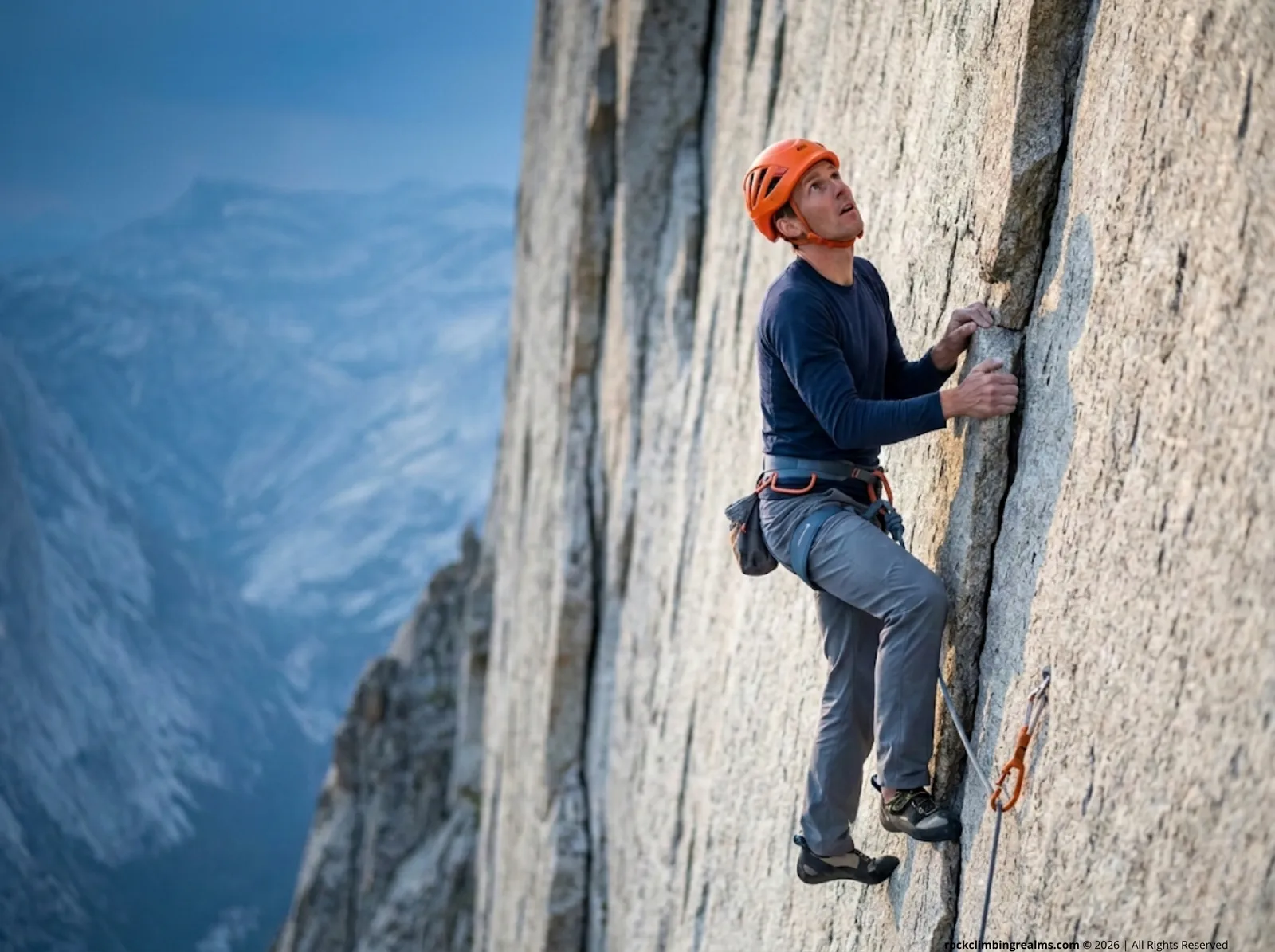
Forty feet above a #2 Camalot, fingers welding to the granite, legs starting to sew-machine. The next piece was ten feet up in a clean crack, but every cell in my body screamed don’t move. I’d been here before. Breathing like a sprinter, vision tunneling, totally gridlocked between commitment and retreat.
That day changed everything, because it forced me to stop treating fear of falling like something to push through and start treating it like something to train. After years of getting gripped, backing off routes I could physically climb, and watching my trad climbing mental game stall while my body got stronger, I finally found a system that works.
This article is the system. You’ll learn why trad climbing triggers a specific kind of panic that sport climbing doesn’t, how to build genuine gear trust through controlled exposure, and how to make clear-headed decisions when you’re forty feet above your last piece with nothing but air below you.
⚡ Quick Answer: Trad climbing fear is driven by your amygdala responding to gear uncertainty and runout exposure. To manage it, use the BEST check-in (Breath, Eyes, Sensations, Tension) to monitor your stress level, build gear trust through systematic weighting and incremental falls on your own protection, and keep anxiety below 6-7 out of 10 to prevent panic. Knowing when to retreat is just as important as knowing when to commit.
Why Trad Fear Hits Different Than Sport Anxiety
Your Amygdala Doesn’t Care About Your Cam Placement
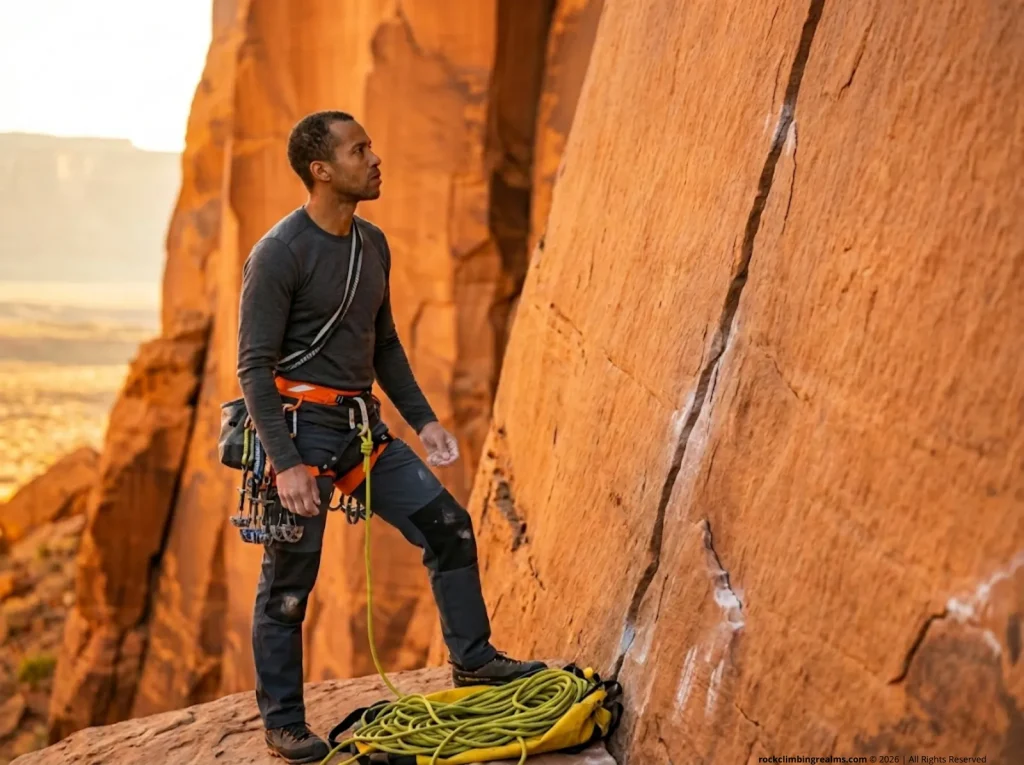
Your brain’s amygdala fires on perceived danger, not actual danger. It processes threat faster than your conscious reasoning can intervene, and it doesn’t distinguish between a bomber #3 in a splitter crack and an old rusty anchor bolt. If your nervous system reads “high place, removable protection, big fall potential,” it hits the alarm.
The numbers confirm it. A 2021 study in the Journal of Clinical Medicine on cortisol and anxiety in rock climbers found that stress hormones more than double before a lead climb — a 142% spike before you even touch the rock. Less experienced climbers showed stress hormone surges up to 376% above resting levels.
That fear response isn’t weakness. It’s your survival hardware doing exactly what it was built to do. The problem is when that hardware overrides the rational part of your brain, the part that knows your placement is solid.
Pro tip: When your legs start to sew-machine, that’s adrenaline, not a premonition. Your body is preparing for a fall, not predicting one. Naming it (“that’s stress hormones, not real danger”) takes some of the power away.
Gear Trust vs. Bolt Security
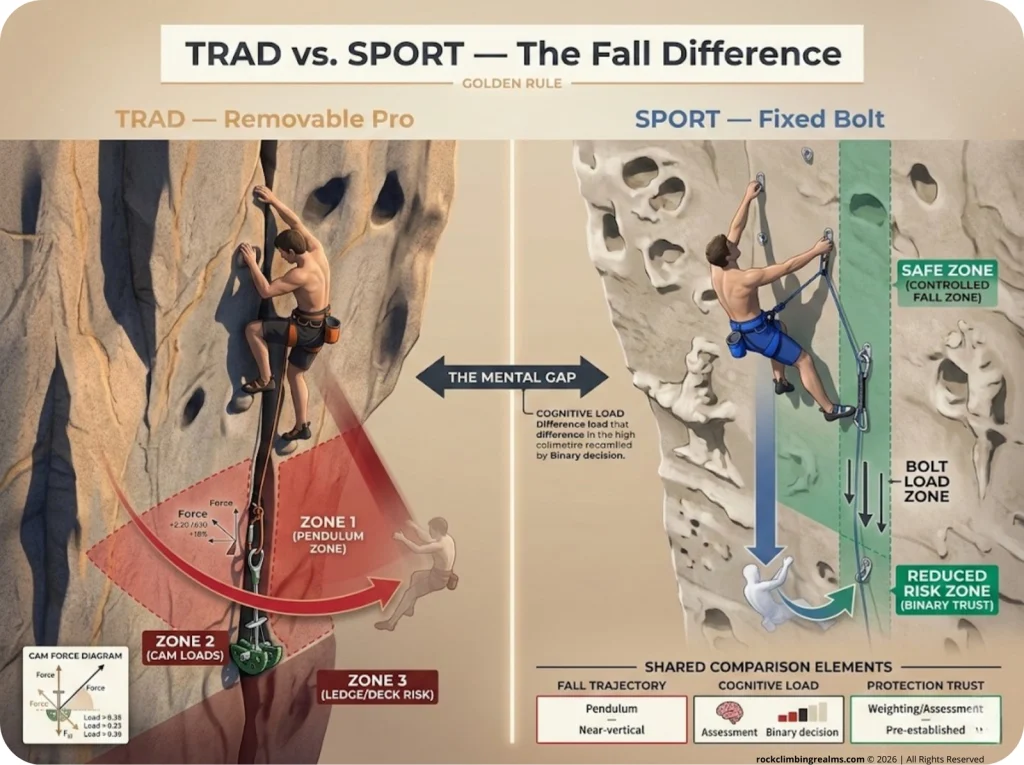
Here’s the real mental gap. Sport climbing is binary: you clip a bolt, you trust it, you move. Trad requires you to actively assess the quality of every piece you place, and you make those risk assessment calls while physically climbing, while pumped, while scared.
That extra cognitive load burns through your composure fast. In sport, the route developer made the risk decisions for you. In trad, every placement is your own judgment call. When you’re understanding what makes trad climbing fundamentally different, you realize the mental game is the discipline, not just the climbing.
Your body knows this instinctively. A long fall on a cam — especially a high-force scenario — creates consequences that a bolt catch simply doesn’t. That gap between “I clipped a bolt” and “I placed a cam I think is good” is where the anxiety lives, right alongside the fear of heights and the loss of control that every climber fights on exposed terrain.
The Fear Toolkit Every Trad Climber Needs
Diaphragmatic Breathing — Your Portable Reset Button
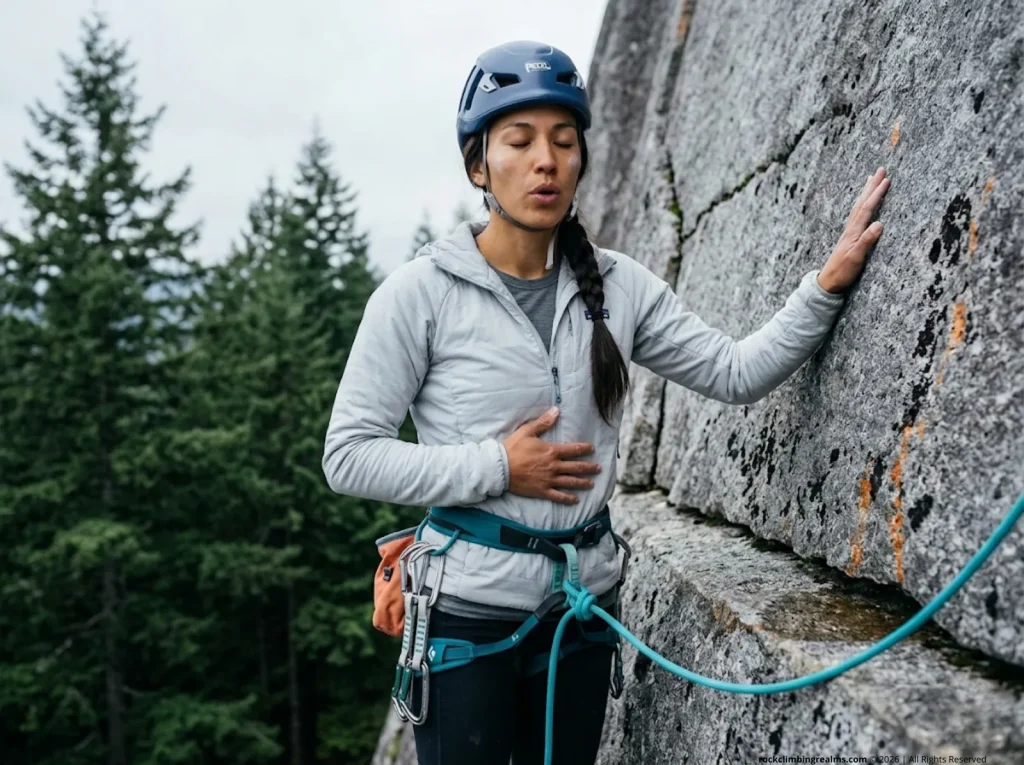
Diaphragmatic breathing is the fastest way to counter what stress hormones do to your body on a trad lead. When you’re gripped, your breath goes shallow and fast, which dumps more adrenaline, which makes your grip tighter, which pumps you out faster. The cycle feeds itself.
The fix is boring-simple. Breathe into your belly, not your chest. Four seconds in, four seconds out. Push the exhale longer than the inhale to activate your body’s built-in calm-down response. Rebecca Williams, clinical psychologist and Smart Climbing coach with 14 years of experience, uses this exact breathing protocol with her clients. You can do it hanging off a rest stance in under ten seconds.
A variation worth trying is box breathing — inhale four seconds, hold four, exhale four. Rock Spot Climbing coaches use this for route planning and section-by-section focus. Both methods work. Pick the one you’ll actually use when you’re thirty feet above your last piece with shaking legs.
Pro tip: Before every gear placement, take one full breath cycle. Just one. Four seconds in, four seconds out. It costs you almost nothing in time and it interrupts the panic feedback loop before it starts.
The BEST Check-in
Hazel Findlay — the first British woman to climb E9, multiple El Cap free ascents, and a mental training coach at Strong Mind Climbing — developed the BEST check-in for exactly this scenario. It stands for Breath, Eyes, Sensations, Tension.
Breath: shallow or steady? Eyes: darting or focused? Sensations: butterflies, chest pressure, tight stomach? Tension: jaw clenched, shoulders bunched? If three out of four are running hot, your stress is above 6 or 7 out of 10 and your decision-making quality is degrading. That’s your signal to pause, breathe, and reassess before committing.
Findlay uses it on sea-cliff routes and multipitch runouts where a wrong call has real consequences. It works because it gives you a concrete measurement instead of a vague feeling. Think of it as situational awareness for your own head.
Positive Self-Talk and Process Focus
Arno Ilgner, author of The Rock Warrior’s Way and a mental-training authority cited by professionals for over 20 years, puts it bluntly: “Learning-based motivation shifts you into the present moment where the stress exists.” When you replace ego-driven self-talk like “don’t fall” with process-focused language like “weight this cam, move to that hold,” your brain stops simulating the future and starts dealing with what’s in front of you.
Negative self-talk is sneaky. “Don’t look down” still encodes the image of looking down. “Next move, good hold, breathe” doesn’t. That’s the difference between being present and staying gripped out of your mind while your thoughts run circles. Visualization before you leave the ground — seeing yourself move through the sequence, placing gear calmly, breathing at each rest — primes your brain to follow the script when the fear kicks in.
This is also where mindfulness and presence-focused process orientation earn their keep, something research from the American Psychological Association on fear as information in high-risk sports supports. Fear tells you something. It doesn’t command you.
Building Gear Trust Through Controlled Exposure
Why “Just Take Whippers” Backfires
Rebecca Williams is direct about this: “We take practice controlled falls at the gym thinking that these will fix our fear. But, according to how fear actually works, this doesn’t make sense.” Random whip therapy without a structured process reinforces tension and panic rather than building confidence.
Ilgner agrees. Practice falls need to be incremental and body-assimilated. If your anxiety hits 7 out of 10 during the drill, you’ve gone too far. You rarely want to push past that threshold. Systematic desensitization keeps you below it while gradually stretching your comfort zone.
The most common mistake on r/tradclimbing? “I tried one huge whipper on a trad route and got traumatized instead of building confidence.” That’s not training. That’s a bad experience dressed up as progress.
The Exposure Ladder
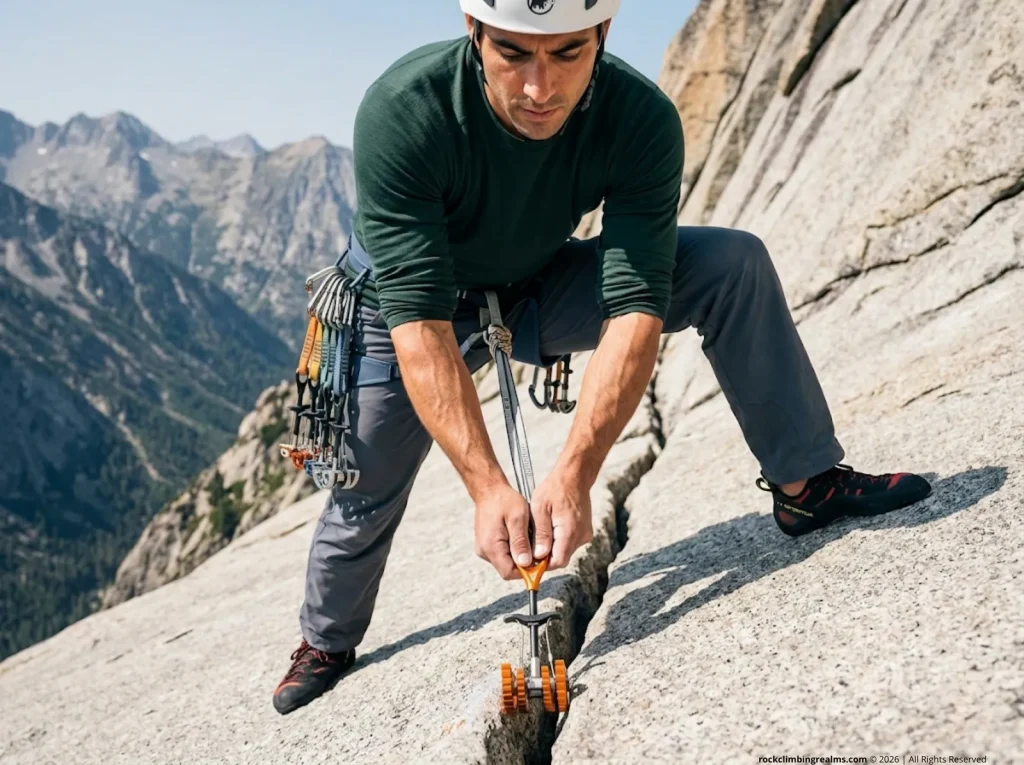
Real gear-placement confidence gets built through a progression, not a single bold moment. Start by weighting every cam after you place it. Stand on it, bounce gently, feel whether it shifts. This is gear-trust building, not fall practice.
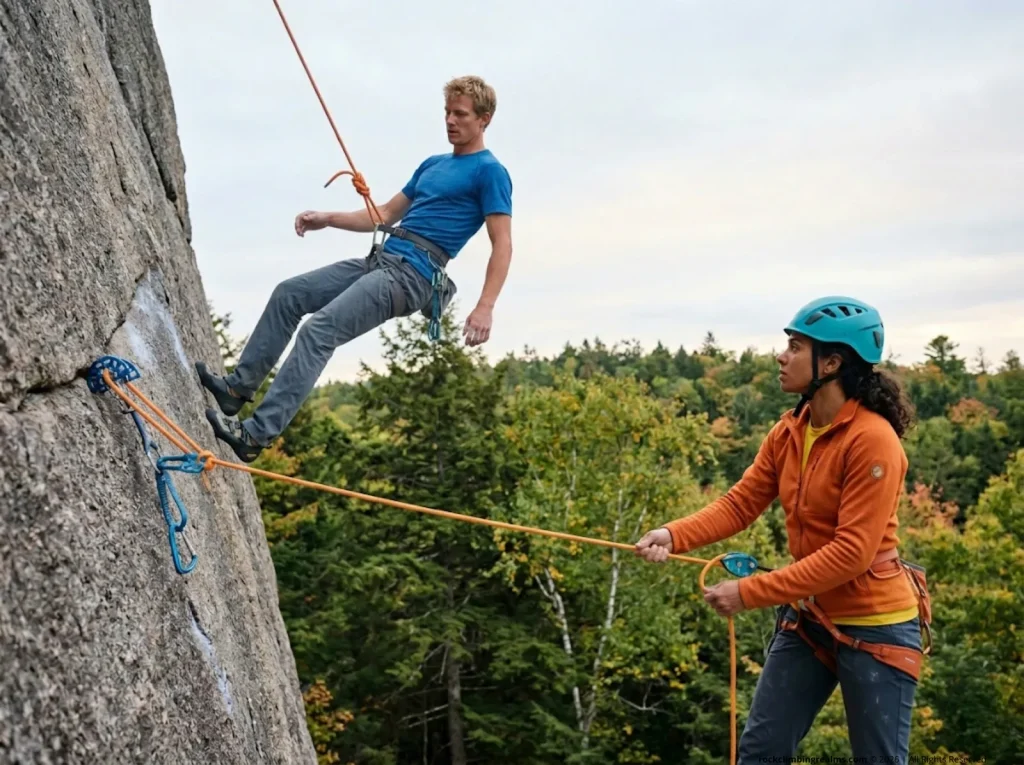
Move to top-rope falls at the height your last cam would catch, so your body gets used to the swing arc. Then short lead falls, three to five feet above a bomber placement. Then progressively longer falls on your own gear, always monitoring where you sit on that 1-to-10 anxiety scale.
Each step has to feel manageable. Systematic incremental exposure rewires your amygdala pathways only when you stay below the panic threshold. If you can reference our complete cam placement guide and trust the mechanics, the mental piece gets easier.
Pro tip: “Climb the gear you place, not the rock. Weight every piece before moving past.” That advice from a veteran trad climber sounds simple, but it is the single most effective trust-building habit in trad.
Testing Placements Under Stress
Visual inspection alone isn’t enough when you’re gripped. Your brain filters out warning signs under stress, and Stanford researchers studying fear circuitry through rock climbing have confirmed how unreliable perception becomes during high arousal.
Use a three-point check: rock quality (tap it, does it sound hollow?), cam lobe contact (full surface?), direction of pull (multi-directional?). If a placement fails any of those and you’re already above 6 out of 10 on the anxiety scale, that’s your signal to back off or find alternate pro.
The 6-Week Trad Head Progression Plan
This is the piece nobody else breaks down. Six weeks, structured and specific.
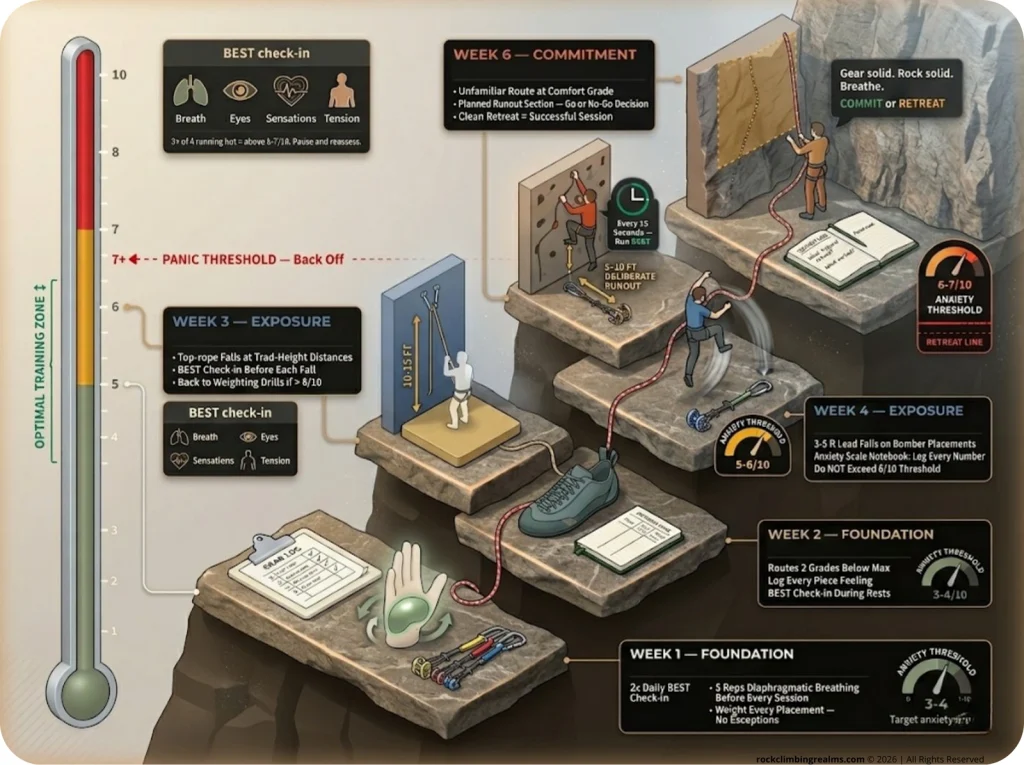
Weeks 1-2 — Foundation
Practice the BEST check-in off the wall, twice a day, two minutes each. Before every climbing gym session, five reps of diaphragmatic breathing while visualizing your last trad route. On trad days, weight every placement before moving past it. No exceptions. Log how each piece felt.
Start on routes two grades below your max. The climbing should be trivial so all your mental energy goes to building the gear-weighting habit.
Weeks 3-4 — Exposure
Week three: top-rope falls at trad-height distances, ten to fifteen feet, on routes you’ve already cleaned. Week four: short lead falls, three to five feet above your last piece on bomber placements. Run a BEST check-in before each fall. If you’re above 6 out of 10, step back to weighting drills.
Track your anxiety on a 1-to-10 scale in a notebook after every session. Don’t skip this. The numbers show you progress your feelings can’t see.
Weeks 5-6 — Commitment
Week five: climb familiar routes and deliberately extend the distance above your last piece by five to ten feet. BEST check-in every fifteen seconds. Week six: try an unfamiliar route at your comfort grade with a planned runout section. Before entering it, verbalize: “Gear solid. Rock solid. Breathe. Commit or retreat.”
Practice deliberate retreat. If anxiety exceeds 7 out of 10, downclimb to your last piece. Then log what triggered the retreat and use a post-mortem analysis after every session. Getting gripped and backing off cleanly is a successful session. You’re training decision-making, not just courage.
When to Commit and When to Back Off
The Runout Risk Calculus
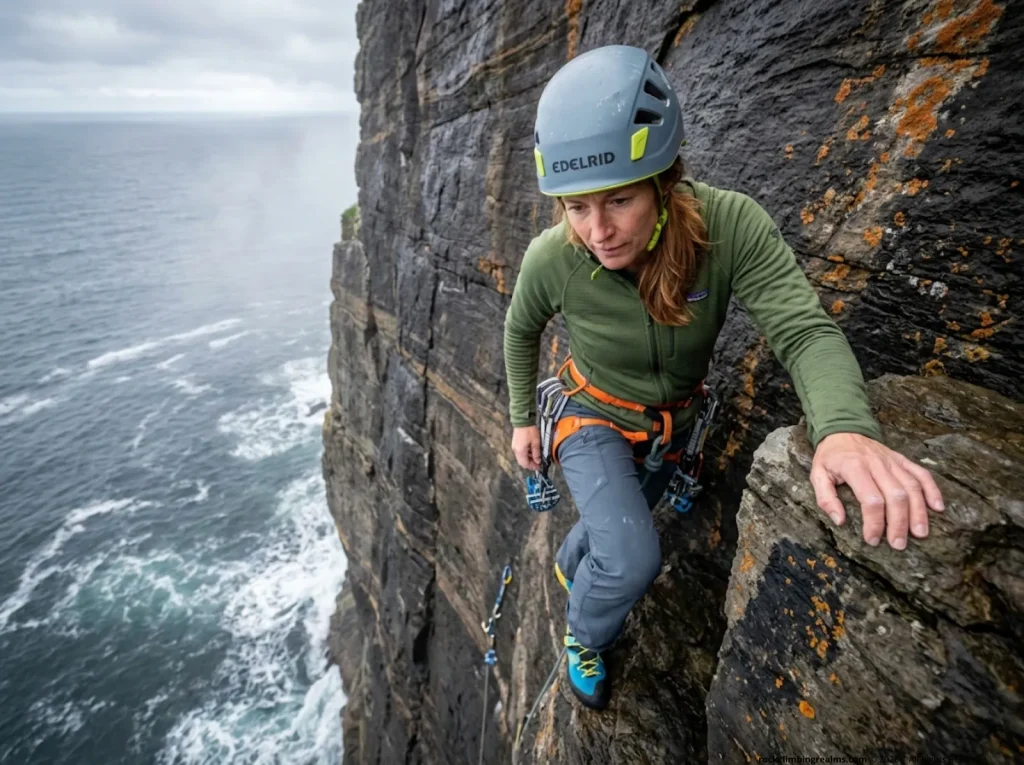
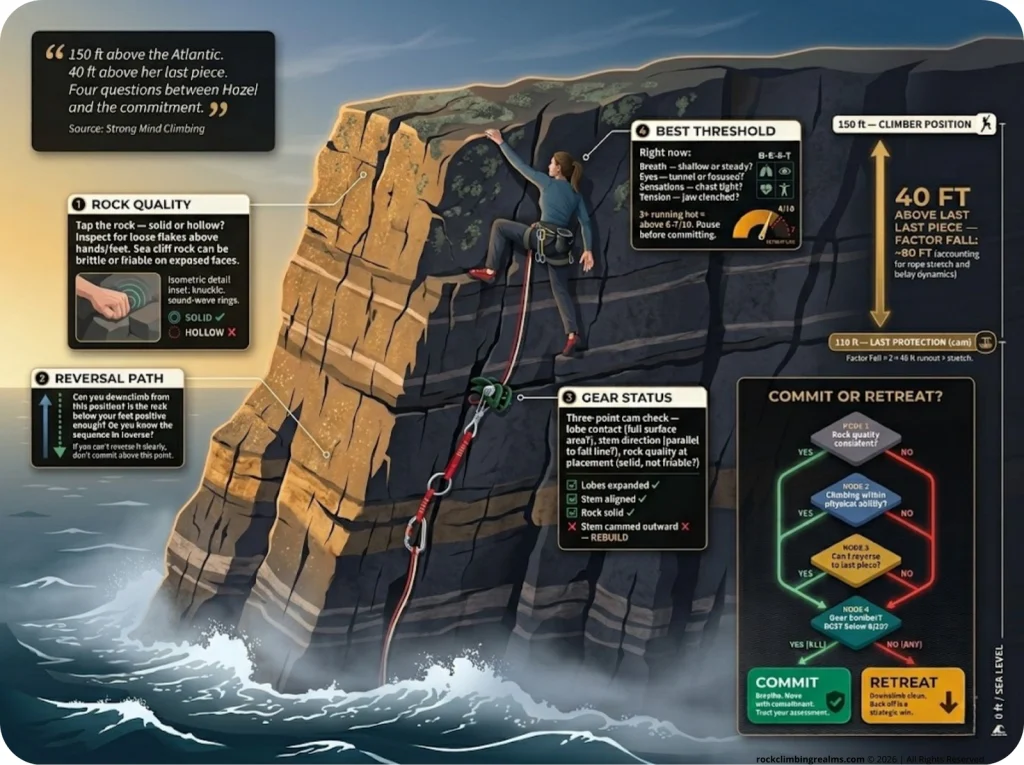
Hazel Findlay’s climb on Muy Caliente (E9) puts this into sharp focus. A hundred and fifty feet up a sea cliff, forty feet above her last piece, the Atlantic Ocean churning below. She had to weigh slip risk, hard catch probability, and ground proximity in real time.
Her framework is simple enough to use at any grade. Four questions: Is the rock quality consistent? Is the climbing within my physical abilities? Can I reverse to my last piece if needed? Is my gear bomber? If all four come back yes and BEST shows below 6 out of 10, commit. If any answer is no, retreat.
That’s not a failure protocol. That’s the kind of judgment that multi-pitch systems for managing commitment on bigger routes demands. Plan the retreat before entering the runout.
Ego, Shame, and the Clean Retreat
Ilgner is blunt about this in The Rock Warrior’s Way: backing off is a strategic decision, not a failure. Ego-driven pushthrough is the most dangerous pattern in trad climbing. If you can’t breathe or assess clearly, downclimb or call “take” immediately.
The truth that experienced trad climbers already know? The most respected names in the discipline are known for wise retreats, not reckless sends. As referenced in the Cleveland Clinic overview of acrophobia and exposure-based treatment principles, forcing yourself through panic reinforces fear rather than reducing it. That’s not mental resilience — that’s just bad process.
Long-Term Trad Confidence — Beyond the Drills
Rewriting Your Fear Story With a Growth Mindset
Fear is data, not a stop sign. Your amygdala is giving you information, not commands. Each session where you assess, decide, and act — whether you send or retreat — physically rewires those fear pathways. Your brain adapts. That’s not wishful thinking; Frontiers in Psychology findings on rock climbing reducing anxiety symptoms back it up.
This is also the backbone of Alex Honnold’s approach to fear and preparation, where methodical exposure replaced raw nerve. His amygdala response has been studied extensively, and the takeaway is straightforward: repeated, controlled exposure to the thing that scares you changes how your brain processes it.
After every trad session, write one sentence: what fear taught me today. Over months, you’ll watch the pattern shift from “I was afraid” to “I assessed and decided.” That’s mental strength in practice, not theory.
The Resource Shelf
A few resources that have stood the test of time:
- The Rock Warrior’s Way by Arno Ilgner — the foundational text for climbing psychology, cited by professionals for over 20 years
- Strong Mind Climbing by Hazel Findlay — online courses with trad-specific exposure ladders and BEST check-in training
- 9 Out of 10 Climbers Make the Same Mistakes by Dave MacLeod — practical performance psychology for real climbing situations
- Smart Climbing by Rebecca Williams — clinical psychology programs designed specifically for climbing fear management
No gear fixes the mental game. Only process does.
Conclusion
Three things to take from this:
Trad fear is neurologically distinct. Your amygdala responds to gear uncertainty and runout exposure in ways bolt-clipping doesn’t trigger. Understanding the mechanism is the first step to managing it.
Breathing and the BEST check-in are your portable reset. Combine them with a structured exposure ladder — not random whips — to build genuine, lasting gear trust.
Knowing when to retreat is the highest form of trad mastery. Every clean back-off strengthens your decisions and builds the trad head that sends harder routes later.
Pick one technique from this article and apply it on your next trad day. Whether it’s weighting every cam, running a BEST check-in at the crux, or deliberately backing off when the numbers say “not today,” you’ll feel the shift. That’s how mental fortitude gets built.
Now go send something.
FAQ
How do I overcome fear of falling while trad climbing?
Build trust through systematic desensitization, not random whippers. Start by weighting every cam placement, progress to short controlled falls on bomber gear, and use the BEST check-in to keep anxiety below 6-7 out of 10. Fear decreases through repeated exposure at manageable intensity, not through forcing yourself through panic.
What is the difference between sport and trad climbing mentally?
Sport climbing is binary — you clip or you don’t. Trad adds active gear assessment under stress, variable fall consequences, and the cognitive load of placing protection while climbing. That extra decision-making amplifies anxiety well beyond what bolt-clipping produces.
How do you learn to trust trad gear placements?
Weight every single piece before moving past it. Bounce gently, test direction of pull, check cam lobe contact. Over weeks, this transforms belayer trust and gear trust from hope into physical confirmation. Combine with controlled falls on known-good placements to build body-level confidence.
What books help with the climbing mental game?
The Rock Warrior’s Way by Arno Ilgner is the foundational text, focusing on reframing fear as information. Hazel Findlay’s Strong Mind program offers trad-specific drills and mental training. Rebecca Williams’s Smart Climbing applies clinical sport psychologist methods directly to climbing fear.
Is it normal to freeze 30+ feet above your last cam?
Completely normal. Stress hormones spike over 140% before lead climbing, movements become choppy, and spatial judgment compresses above personal comfort thresholds. The solution isn’t to push through blindly — it’s to pause, run a BEST check-in, breathe, and make a deliberate decision to commit or retreat.
Safety Notice: Rock climbing and mountaineering are inherently high-risk
activities that can involve physical trauma or fatal incidents. The information on Rock Climbing Realms is for
educational and informational purposes only. Techniques and advice presented here are not a substitute
for professional, hands-on instruction. Conditions and risks vary by location. Always seek guidance
from a qualified instructor before attempting new techniques. By using this website, you agree that you
are solely responsible for your own safety. Any reliance you place on this information is strictly
at your own risk, and you assume all liability for your actions. Rock Climbing Realms and its authors
will not be held liable for any harm, damage, or loss sustained in connection with the use of this information.
Affiliate Disclosure: We are a participant in the Amazon Services LLC Associates Program, an
affiliate advertising program designed to provide a means for us to earn advertising fees by advertising and linking
to Amazon.com. As an Amazon Associate, we earn from qualifying purchases. We are also an official affiliate partner
of Black Diamond Equipment via the AvantLink network. If you click on a Black Diamond affiliate link and make a
purchase, we may earn a commission at no additional cost to you. We also participate in other affiliate programs.
Additional terms are found in the terms of service.